An agentic reverse-engineering loop your team shares.
An analyst asks whether a sample is suspicious, what it executes, or which indicators matter. An agent works that question across static analysis and a sandbox, and the session stays open for the team.

The agent takes the passes. Analysts decide where it goes next.

Recovered code sets up the next run. What executed comes back into the analysis.
Teammates join the same evidence while the incident is still live.
Traditional sandboxes leave your team guessing when samples fail to detonate.
Analysts export data and switch between tools.
Less experienced analysts stall on inconclusive sandbox reports, and the work falls back on a few experts.
Findings stay with whoever ran the tool, so triage and response wait on a handoff.
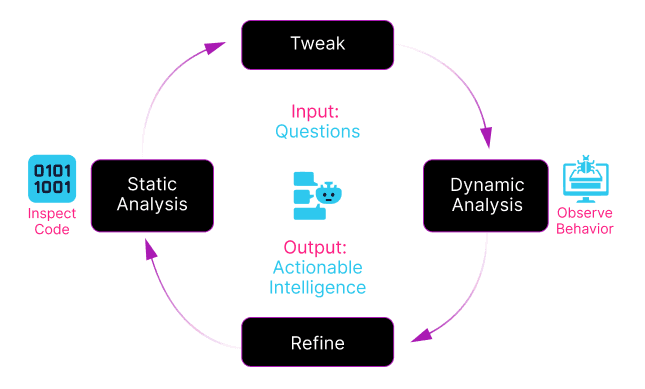
The agent alternates static code analysis and a sandbox, using each result to set up the next run, until it can answer—or until an analyst takes the next move in the same session.
Each run is set up again from what the last one revealed. Recovered code changes the environment before the next run, and what actually executed is what gets analyzed next. Your team gets an answer grounded in the code and the observed behavior, in a session they can continue.
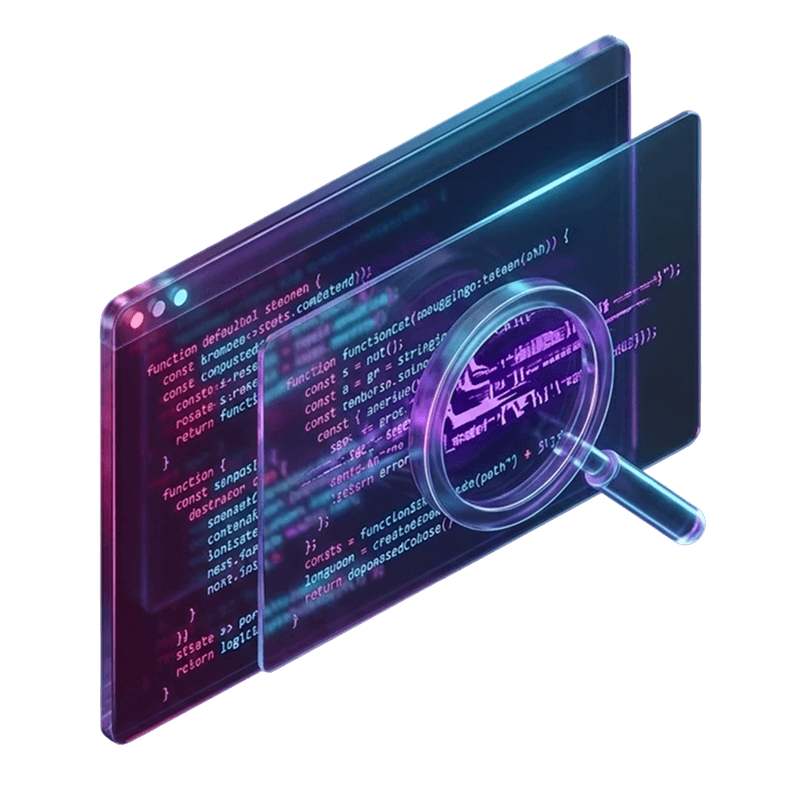
Decompiled code, traces, and the live machine stay open in one session. Inspect and debug the sample without exporting a result or switching tools.
Enhance team efficiency with multi-user collaboration features. Share insights, and accelerate collective problem solving.
Malware analysts, incident responders, threat hunters, and SOC teams.
Join the pilot.
Join nowJoin our pilot program